Berlin 2026: The Ultimate Discovery Guide and Alternative Routes
1. Introduction: The Eternal Metamorphosis
Berlin is a city that refuses the finality of a finished state. By 2026, it has solidified its position as the pinnacle of European urban evolution—a sprawling experiment where heavy Prussian history is in constant juxtaposition with a raw, tech-forward future. To navigate Berlin is to engage with its "chaotic order," a unique atmosphere where rigid efficiency and anarchic creativity exist in a delicate, high-voltage balance. For the discerning traveler, 2026 represents the city at its most refined, offering a sophisticated layer of globalized infrastructure atop its legendary "poor but sexy" grit.
2. Tracing the Scars: An Essential Pilgrimage Through History
To grasp the soul of Berlin, one must walk its historical fault lines. These sites are not mere monuments; they are active dialogues with the 20th century.
- Brandenburg Gate & The Reichstag: Pariser Platz holds the Brandenburg Gate, a neoclassical symbol that transitioned from a mark of division to the definitive emblem of German unity. Adjacent is the Reichstag, the seat of the German Parliament (Bundestag).
- Smart Instruction: Access to the glass dome is free, but mandatory advance registration is required. While official sources require registration "in advance," travel strategists recommend booking at least seven days out to secure prime sunset slots. You must present a valid passport/ID; security here is as uncompromising as an international border crossing.
- The Memorial to the Murdered Jews of Europe: A short walk south reveals 2,711 concrete slabs of varying heights. The experience is designed to be intentionally disorienting; the wave-like floor and towering pillars create a sense of isolation and uncertainty. For a deeper, sobering context, the underground information center houses the names of millions of victims.
- Checkpoint Charlie & Topography of Terror: At Checkpoint Charlie, the primary Cold War crossing, observe the specific placement of the soldier portraits: the American soldier faces the former Soviet sector, while the Soviet soldier looks back toward the American side. Nearby, the Topography of Terror sits on the former Gestapo headquarters, providing an unflinching documentation of the Third Reich’s machinery of state.
3. The Alternative Pulse: Street Art and Creative Enclaves
The city’s creative energy is concentrated in the districts of Friedrichshain and Kreuzberg, where industrial relics have been reclaimed by the avant-garde.
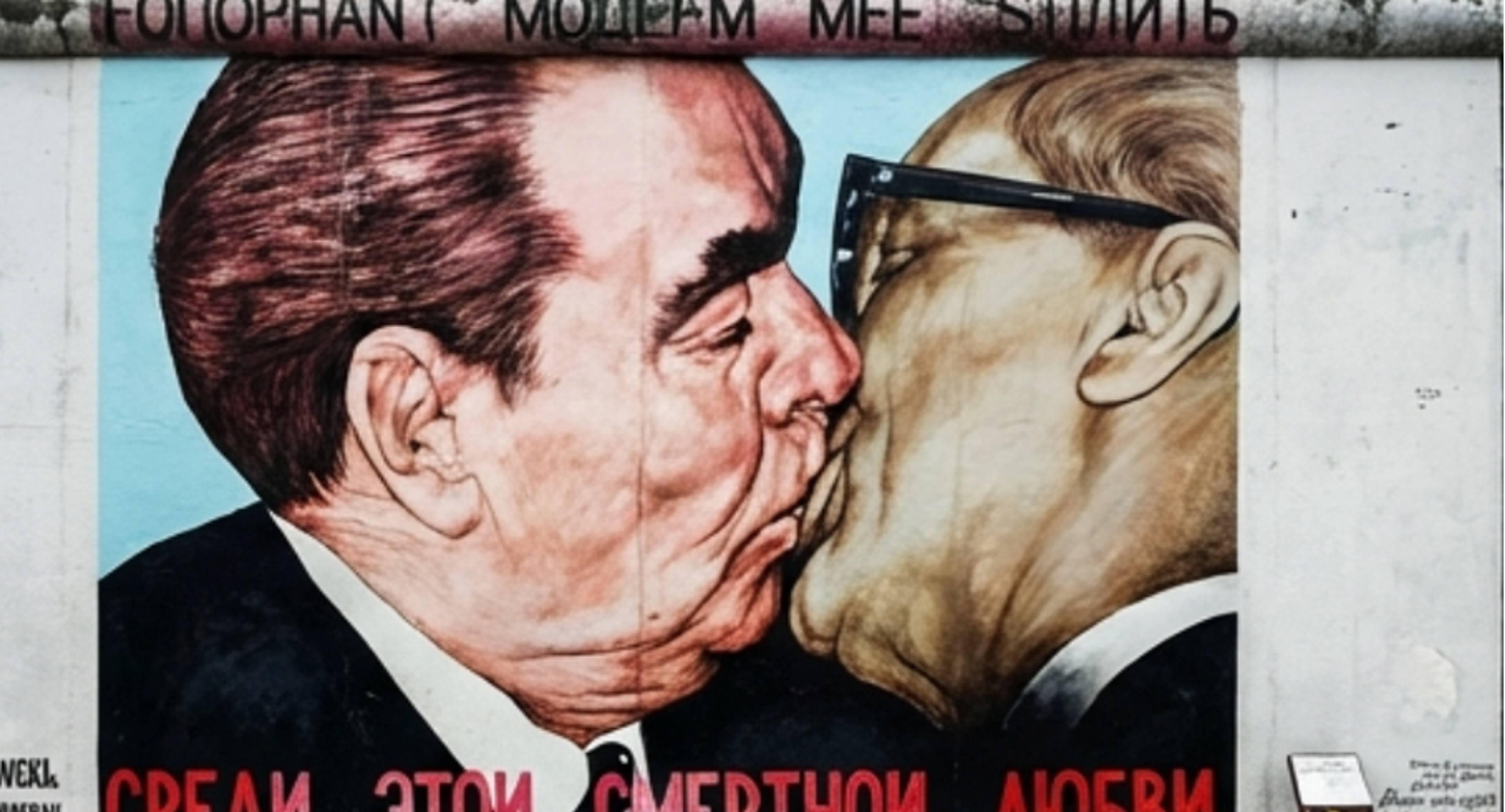
- East Side Gallery: Accessible via Warschauer Straße, this 1.3km stretch of the wall is the world’s largest open-air gallery. It features a historic collaboration of 118 artists from 21 countries. Beyond the "Fraternal Kiss," look for the "Trabant breaking through," a poignant symbol of 1989’s global euphoria.
- Mauerpark & RAW-Gelände: Mauerpark (literally "Wall Park") preserves an 800-meter stretch of the fortifications, now a canvas for graffiti and a stage for street musicians. For a grittier industrial vibe, the RAW-Gelände in Friedrichshain is a sprawling complex of galleries and clubs set within former train repair halls.
- Hidden Gems: For 3rd-wave coffee and high-end boutique culture, the Hackesche Höfe at Rosenthaler Straße offers a sophisticated alternative. Its interconnected courtyards represent the pinnacle of Berlin’s gentrified, yet aesthetically conscious, urban renewal.
4. Cultural Deep-Dive: Museum Island & Beyond
Berlin’s high-culture heart beats on Museum Island, a UNESCO World Heritage site that houses five world-class institutions.
- Institutional Highlights: The Neues Museum is an essential stop to view the 3,300-year-old Bust of Nefertiti.
- Critical Alert: The Pergamon Museum is closed for extensive renovation until 2037. Travelers seeking the Pergamon Altar will find it inaccessible for the next decade.
- Berlin Cathedral (Berliner Dom): This neo-Renaissance masterpiece is the largest Protestant church in Germany. Explore the Hohenzollern Crypt, which serves as the final resting place for nearly 100 royals. The dome's walkway provides the city's most rewarding 360-degree panoramic views.
5. The Berlin Palate: From Street Food Icons to Gastronomy
The Berlin palate is defined by a "Street vs. Chic" dichotomy. A Berliner values a €4 sausage and a high-end food hall with equal fervor, viewing both as authentic expressions of the city's class-defying culture.
- The Street Icons: The Currywurst (visit Konnopke’s Imbiss in Prenzlauer Berg) and the Döner Kebab are the city's fuel. Mustafa’s Gemüse Kebab, located at the Mehringdamm metro exit, is legendary; however, the two-hour queues are a local rite of passage.
- Modern Classics: For premium pancakes with cultured cream, Anneliese is the destination of choice. For those seeking interactive dining, the Berliner Republic features a "Beer Exchange" where drink prices fluctuate in real-time based on demand.
- High-End Alternative: Skip the street queues for the 6th-floor food hall at KaDeWe. It is a curated temple of global gastronomy and a refined sanctuary from the city's outdoor chaos.
6. The Insider’s Manual: Transport & Beating the "Tourist Traps"
Strategic travel in Berlin requires bypassing overpriced clichés in favor of local hacks.
- The "Bus 100" Strategy: Avoid the €25 Hop-on-Hop-off buses. Use Public Bus Line 100 for €2.90 (single) or better yet, a €9.60 Day Ticket for unlimited efficiency. This double-decker passes Museum Island, the Reichstag, and the Zoo. Download the City Pirates app for a free audio guide synced to the route.
- The Viewpoint Pivot: The TV Tower (Fernsehturm) is a €23 bottleneck. Opt instead for the Panoramapunkt at Potsdamer Platz (featuring Europe’s fastest elevator) or the Flak Tower at Humboldthain Park, which offers an elevated, historic view of the northern city for free.
- The Teufelsberg Warning: The old spy tower at Teufelsberg has transitioned into a commercialized trap, charging €5 for entry and extra for photography with restricted access. For a more authentic "Lost Place" experience, explore the abandoned Johannisthal airfield or the Blub leisure center ruins.
- Shopping: Contrast the luxury of KaDeWe with the Bikini Mall (focused on local startups) or the Berlin Designer Outlet, accessible via a free shuttle from Ku'damm on Fridays and Saturdays.
7. Cultural Warnings & Logistics (The Berlin Reality)
Berlin operates on a set of rigid social and logistical norms that can catch the uninitiated off guard.
- Sunday Silence: Almost all retail shops and pharmacies close on Sundays. The city essentially pauses; plan your logistics accordingly.
- The Cash/Card Paradox: While "Cash is King" remains the rule for small cafes and bars, the Berlin Cathedral is a rare exception where cash is not valid—only credit cards are accepted.
- The "Honor System" Trap: There are no turnstiles on the U-Bahn or S-Bahn. However, you MUST validate (stamp) your ticket in the yellow/red machines before boarding. Plainclothes inspectors are ruthless, and the €60 fine is non-negotiable, regardless of your tourist status.
8. Summary Box: 3 Golden Rules for Berlin 2026
Rule
Instruction
1. Validate or Pay
Never board a train without stamping your ticket. Inspectors do not accept "tourist confusion" as an excuse; the €60 fine is a certainty.
2. Book the Glass
The Reichstag dome is free but requires advance booking and a passport. Reserve a week out to ensure entry.
3. Neukölln for Nightlife
For the city's "coolest" and most authentic bar scene, head to Weserstrasse in Neukölln. It offers better value and more grit than the tourist-heavy Simon-Dach-Straße.
9. Conclusion
Berlin remains the smartest travel destination of 2026—a city that has mastered the art of being modern without losing its "poor but sexy" soul.
Berlin’s Hidden Palimpsest: A Curator’s Guide to the City of Eternal Reinvention
Berlin is a city that demands more than a cursory glance. It is a profound study in contrasts, where the heavy shadows of a turbulent past are effortlessly eclipsed by a vibrant, avant-garde energy. To walk through Berlin is to traverse a landscape that was once a literal "death strip"—exemplified by the Brandenburg Gate, which stood isolated in a forbidden zone for thirty years—and has since blossomed into Europe’s most resilient cultural epicenter.
This is not a city that hides its scars; it treats them as a foundation for a creative future. To truly appreciate its depth, one must look beyond the standard itinerary and embrace the layers of a city that is always becoming, but never finished.
The Glass Dome of Democracy: Transparency at the Reichstag
The Reichstag is perhaps the most eloquent symbol of modern Germany. Once a site of fire and wartime ruin, its restoration represents a commitment to transparency. The addition of the massive glass dome allows the public to literally look down upon the proceedings of the Parliament (Bundestag) below—a deliberate architectural statement of political openness.
"The Reichstag stands as a symbol for the modern German democracy, having survived wars, fire, and the country's division to become one of Berlin's most iconic landmarks."
To witness this 360-degree panorama, one must navigate the city’s contemporary security with foresight. Access is complimentary, but you must register in advance with your full details and carry a valid ID for the rigorous security screening. It is a small price for a view that encompasses the very soul of the city.
The Emotional Architecture of the Holocaust Memorial
Near the Brandenburg Gate, the Memorial to the Murdered Jews of Europe offers a visceral, non-traditional encounter with history. There are no names or symbols here; instead, 2,711 concrete slabs of varying heights create a wave-like grid. As you wander deeper into the undulating paths, the ground slopes and the slabs tower overhead, evoking an intentional sense of being disoriented, lost, and dehumanized.
It is a masterpiece of "emotional architecture," forcing a physical confrontation with the scale of the genocide.
"The impact of the Holocaust isn't just what we're seeing, what we read, what we learn—it's much, much deeper."
The €3 Sightseeing Hack: Public Bus 100
While the typical traveler may spend €25 on a "Hop-on-Hop-off" bus, the sophisticated voyager understands that Berlin’s best views are found on Public Bus 100. This local double-decker route winds past the "green lung" of Tiergarten, the Victory Column, and the ruins of the Kaiser Wilhelm Memorial Church for a mere €2.90 to €3.00.
- A Critical Curatorial Warning: Berlin operates on an honor system, but it is strictly enforced. You must stamp and validate your ticket at the small yellow machines on the bus or platform. Failure to do so can result in a €60 fine—a jarring end to an otherwise elegant afternoon.
For an immersive experience, download the City Pirates app, which provides a free, synchronized audio guide specifically for this route as you take a front-row seat on the upper deck.
Sanssouci: A Baroque Escape of Peaches and Bananas
For a respite from the urban hum, the UNESCO World Heritage site of Sanssouci Park in nearby Potsdam is essential. It is a "meticulously maintained" masterclass in Baroque landscaping, famous for its stunning terrace complex.
The true wonder of Sanssouci lies in its historical nurseries. In the 1700s, Frederick the Great achieved the improbable: cultivating exotic bananas, melons, and peaches in the harsh Prussian climate. Today, the park remains a sanctuary of over 230,000 plants and marble statues.
"Set away from the city's noise, this Baroque style garden offers a serene escape in nature, meticulously maintained based on historical designs."
The "Other" View: Panoramapoint vs. The TV Tower
The TV Tower (Berliner Fernsehturm) is an iconic skyline fixture, yet with entry prices around €23 and predictably long queues, it can often feel like a tourist trap. For a more curated experience, head to Panoramapoint at Potsdamer Platz.
Home to Europe's fastest elevator, Panoramapoint offers equally spectacular views at less than half the price. Once at the top, you can enjoy a coffee and a slice of cake at the cafe while contemplating the history of the square below. Locally, the savings are often measured in a unique metric of value: skipping the TV Tower grants you the budget for at least seven kebabs.
"Little Istanbul" and the Soul of Kreuzberg
To find the city’s modern pulse, one must visit Kreuzberg. Once a neglected border district, it was transformed by the "Guest Workers" of the 1960s into the vibrant "Little Istanbul."
The neighborhood’s charm is found in its sensory details: the clinking of beer glasses on the Admiralbrücke at sunset and the legendary queue at Mustafa’s Gemüse Döner. While the wait at Mustafa's is long, the fusion of chicken, toasted vegetables, and secret sauces is a quintessential Berlin ritual. For a modern contrast, the nearby Bikini Mall offers high-quality design and startups housed in wooden "pop-up" boxes, eschewing the over-commercialized feel of larger department stores.
"Everything here just works... it’s a real vibe that captures the friendship, optimism, and freedom of expression found in the new Berlin."
Conclusion: A City of Endless Reinvention
Berlin is a place where history is never buried; it is reimagined. It has moved from the darkness of the Führerbunker—now an unassuming parking lot—to the literal transparency of the Reichstag’s glass dome. This spirit of resilience is best viewed at the East Side Gallery, where the longest surviving stretch of the Wall has been reclaimed as a canvas for freedom.
As you depart, you are left to ponder: how can a city so marked by division emerge as a global beacon of unity? The answer is found in the very streets you’ve walked—a city that refuses to be defined by its past, choosing instead to wear its scars as a badge of creative triumph.