Beyond the Canals: 7 Things That Will Actually Surprise You About Amsterdam
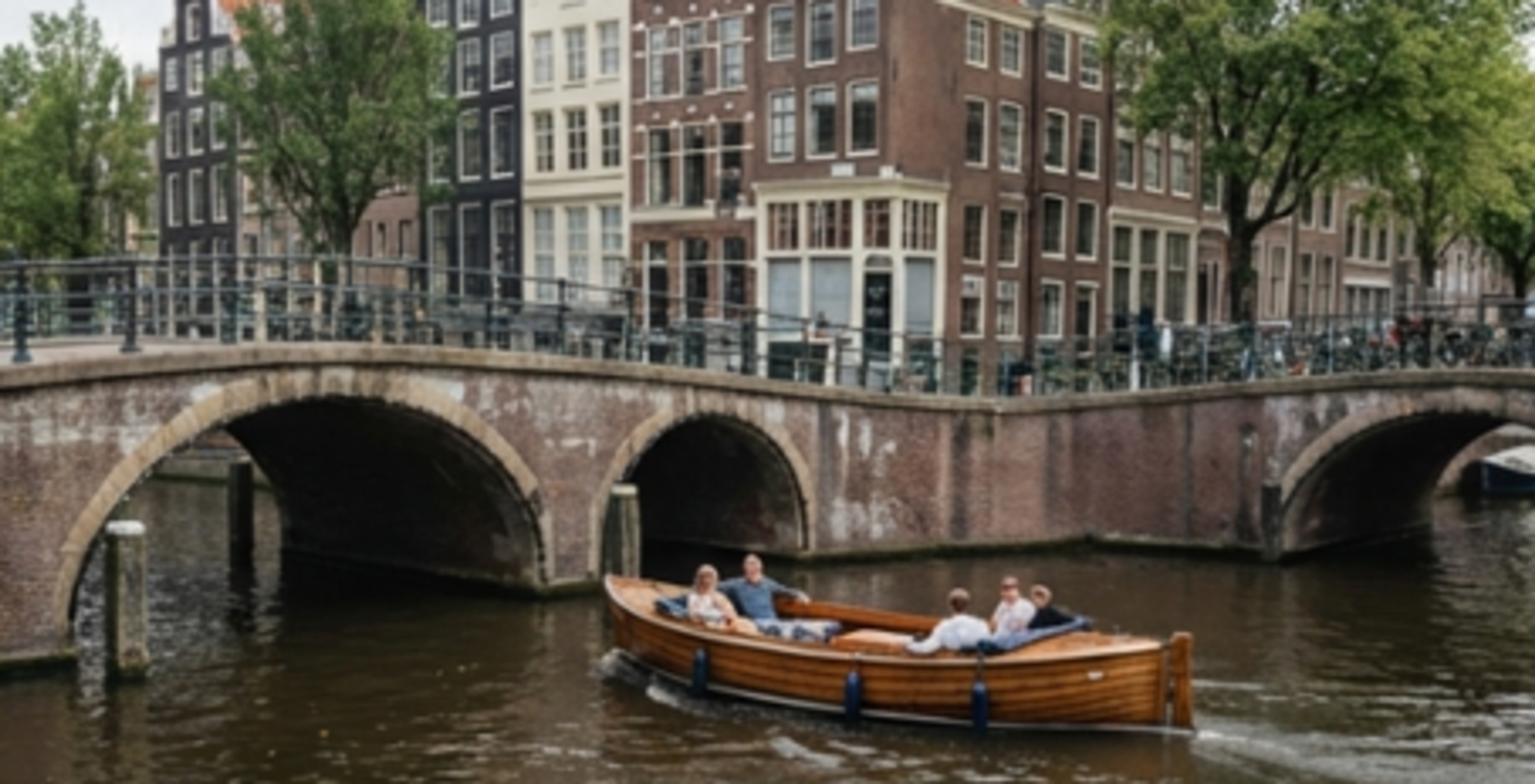
To the uninitiated, Amsterdam is a flat sequence of postcards: clogs, windmills, and a gentle tilt of 17th-century gables. In reality, the city is a high-velocity architectural machine of water and wheels, operating on an internal logic that punishes the unprepared. Tourists frequently falter here because they treat the city like a museum rather than a functional, modern metropolis with rigid social codes and logistical hurdles. To navigate Amsterdam with the savvy of a local, one must look past the scenery and master the cultural mechanics that hum beneath the surface.
1. The Glass House Philosophy: Why No One Has Curtains
Walking through Amsterdam’s residential quarters, you will observe a striking lack of window coverings. Massive, street-level windows offer unobstructed views into private living rooms—a practice that is both a historical artifact and a modern social requirement. This transparency is rooted in 17th-century Calvinism; keeping curtains open was a way to prove to one’s neighbors, and to God, that one had nothing to hide.
In the contemporary context, this "public-private blur" remains a pillar of community trust. To close your curtains during the day is often perceived as rude, implying you are concealing something untoward from the neighborhood. It is a unique form of urban transparency that prioritizes the collective gaze over individual privacy.
"The Dutch have nothing to hide."
2. The "Coffee Shop" Confusion: A High-Stakes Vocabulary Lesson
The most common rookie mistake in Amsterdam is linguistic. If you are seeking a morning caffeine fix, you are looking for a Café or a Koffiehuis. If you enter a Coffee Shop, you are entering a venue specifically licensed for the sale of cannabis.
While the city is famous for its "tolerance" policy, that tolerance has strict geographical boundaries. Lighting up in public squares, parks, or while causing a scene in a large group is generally frowned upon and can result in significant fines. The police frequently turn a blind eye to a solitary resident on a bench, but for tourists making a spectacle, the rules are enforced with precision.
3. Survival of the Swiftest: The Bike Lane Hierarchy
In Amsterdam, the bicycle is a tool of efficiency, not recreation. The red-paved lanes are high-speed transit arteries, and the local tolerance for pedestrian interference is zero. You must also account for the rise of stylish, high-speed e-bikes that move far faster than a standard cruiser.
Renting a bike is often discouraged for the unskilled; the intensity of the traffic requires a level of proficiency that most casual visitors lack. If you step into a red lane to frame a photograph, expect a sharp bell or a verbal reprimand.
"There is a zero tolerance to pedestrians in bike lanes."
4. The Best Food Isn't Dutch—It’s Indonesian
The most sophisticated culinary experience in Amsterdam is not found in a pancake house, but in an Indonesian restaurant. Following Indonesia’s independence in 1945, a deep cultural and culinary exchange reshaped the city’s palate. Statistically, there are now more Indonesian restaurants in the city center than traditional Dutch ones.
The essential experience is the Rijsttafel (Rice Table), a lavish spread of dozens of small, spice-heavy dishes served with rice. It is a direct legacy of colonial history and remains the true soul of Amsterdam’s modern dining scene.
5. The 6-Week Rule: The End of Spontaneous Sightseeing
Spontaneity is a luxury the city no longer affords. Amsterdam’s premier cultural sites—the Anne Frank House and the Van Gogh Museum—operate on a strict online-only ticketing system. Tickets for the Anne Frank House are released six weeks in advance and often vanish within minutes.
Crucially, the "I Amsterdam" card—while useful for many—has significant limitations. As of 2022, the Van Gogh Museum is no longer included in the pass, and the Anne Frank House remains excluded. Before purchasing any discount card, you must verify the "Free with I Amsterdam" label against your specific itinerary. This "online-only" culture even extends to bakeries; at the viral Van Stapel, you can skip a massive physical queue by ringing a "Golden Doorbell" if you have pre-booked your cookies online.
6. A Cashless Kingdom (With a Catch)
Amsterdam is one of the most aggressively cashless cities in Europe. From major galleries to tiny stroopwafel stalls, contactless and tap-to-pay are the standard. This digital-first approach extends to public transport, where you can "tap in and out" of trams, buses, and trains with a phone or credit card.
However, there is a penalty for the uninformed at the airport: buying a physical train ticket from the yellow NS machines at Schiphol incurs a €1 surcharge per ticket. To avoid this "tourist tax," use the NS mobile app or simply tap your contactless card at the station barriers. Because of this digital dependency, a reliable data plan (eSIM) is a non-negotiable requirement for navigation and ticketing.
7. The "Holland" Misnomer and the 5-Minute Weather Rule
While many use the names interchangeably, "Holland" refers only to two specific provinces (North and South Holland); the country is The Netherlands. Using the correct terminology is a mark of cultural savvy that locals appreciate.
Logistically, you must prepare for the "wait 5 minutes" rule. The city experiences over 200 days of rain annually, but it is rarely a persistent downpour. The rain typically comes in light, fast-moving bursts. The local survival kit is not an umbrella—which is useless in the wind—but rather a light, waterproof jacket and breathable layers.
Conclusion: Looking Toward the Noord
To find the city’s creative edge, one must leave the crowded canal ring. Neighborhoods like the Jordaan and De Pijp offer a glimpse into authentic residential life, but the real transition happens across the water. A free ferry from Central Station takes you to Amsterdam Noord and the NDSM wharf in less than five minutes, revealing an industrial, street-art-heavy landscape that feels worlds away from the tourist center.
Amsterdam is a city of two faces: one loud and touristic, the other respectful and deeply nuanced. If the city has nothing to hide behind its curtains, what will you discover when you finally step behind the tourist traps?